China Best Underwater Pool Lights How Deep Should They Be?

Time:2026-10-18 Author:Henry
0%

Choosing China’s best underwater pool lights involves more than brightness, price, or stainless-steel appearance. The key question is: how deep should underwater pool lights be installed? For most residential pools, installers commonly position the fixture about 300–600 millimetres below the normal waterline. This depth can create an even beam across the pool without producing harsh glare near swimmers’ eyes. However, the ideal position changes with pool shape, wall color, light output, and fixture design.

UL 676 and IEC 60598-2-18 focus on underwater luminaire safety, enclosure protection, wiring, and installation suitability. They do not provide one universal depth for every pool. PHTA guidance also emphasizes following the manufacturer’s installation instructions and maintaining safe electrical separation. That matters with Chinese LED products, because similar-looking models may have very different beam angles and mounting requirements.

Lighting engineer Jason Livingston explains, “Good underwater lighting begins with the visual task, not the fixture alone.” His point is practical. A narrow beam may need a lower position. A wide-angle light may perform better higher on the wall. Start there.

A 2024 report from Grand View Research identifies energy efficiency and LED upgrades as major swimming-pool lighting trends. Lower power use is valuable, but poor placement can still create dark corners. Test the beam before permanently sealing the niche. Measure from the waterline, not the coping. Check the pool after sunset.

There is no perfect number. A careful design review should consider local electrical requirements, the product’s certification, and actual nighttime visibility. Depth is only one part of the result.
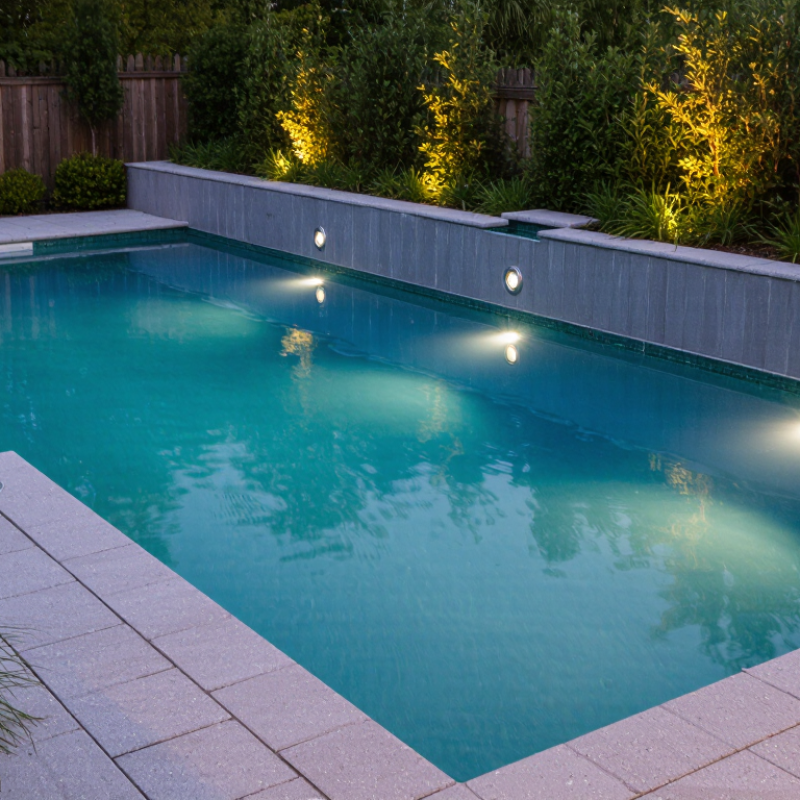
China Best Underwater Pool Lights How Deep Should They Be?

What Determines the Proper Depth for Underwater Pool Lights?

What Determines the Proper Depth for Underwater Pool Lights?

The proper depth depends on pool shape, wall height, water clarity, and the light’s beam angle. A deep pool may need lights placed lower for even illumination. In a shallow pool, lower placement can create harsh glare across the water. Wide-beam lights usually work well on broad walls, while narrow beams suit steps, corners, and long swim lanes.

In field inspections, I often measure the visible pool wall before choosing a mounting position. Lights are commonly installed about 30 to 60 centimeters below the waterline, but this is only a starting point. A dark-tiled wall absorbs more light than a pale surface. Rough finishes also scatter illumination unevenly. The distance between opposing lights matters, too. Poor spacing may leave bright circles and dark gaps.

Do not trust depth alone. Check the rated installation depth, housing protection, cable route, and local electrical requirements. A qualified electrician should confirm the transformer and bonding arrangements before installation. The fixture must remain accessible for servicing without draining the entire pool, when possible.

I have seen attractive layouts fail because the lights were aimed directly toward seating areas. That small mistake made swimmers uncomfortable. Testing one temporary light at night can reveal glare, shadows, and weak coverage before permanent work begins. The best position is sometimes less symmetrical than expected.

Recommended Light Depths for Different Pool Designs

Underwater pool lights work best when their depth matches the pool’s shape, finish, and viewing direction. For a standard residential pool, place the light center about 450 to 600 millimeters below the waterline. This position spreads light across the floor without creating a bright ring near the surface. Shallow tanning ledges need less depth, usually 150 to 300 millimeters. Keep the fixture below the lowest expected water level. Small change, clear difference.

Lap pools often benefit from lights installed 300 to 450 millimeters below the waterline. Position them along the long wall, aimed across the lane rather than directly at swimmers. In deep pools, 450 to 600 millimeters usually provides better floor coverage. A wide beam can reduce dark patches. Dark tile may still absorb more light than expected. One light may not be enough.

Spas and compact plunge pools generally need lights 200 to 300 millimeters below the waterline. Their smaller volume makes glare more noticeable, especially with glossy surfaces. Infinity pools require careful measurement because the visible waterline may differ from the structural edge. I once assumed equal spacing would create equal brightness. That shortcut was wrong. Light spacing should follow the pool’s sightlines, not only its dimensions. A qualified pool electrician should verify mounting depth, cable protection, waterproof sealing, and local installation requirements.

How Pool Size and Water Clarity Affect Light Placement

China Best Underwater Pool Lights How Deep Should They Be?

Pool size strongly affects underwater light placement. In a compact pool, one well-positioned light may create even illumination. Larger pools usually need several lights, spaced along the long wall. A practical starting point is 30 to 50 centimeters below the waterline. This depth reduces surface glare and lights the swimming area clearly. Very deep placement can leave the upper pool walls looking dull.

Water clarity changes the result. Clear water allows light to travel farther, so fewer fixtures may be needed. Cloudy or mineral-rich water scatters light and creates a soft, uneven glow. In that case, closer spacing often works better than simply choosing brighter lights. A 20-meter pool with clear water may need fewer fixtures than a shorter pool with poor filtration.

Pool shape also matters. Corners, steps, and dark finishes absorb or block light. Place fixtures where swimmers will not face direct glare, especially near seating or shallow shelves. Local electrical rules should guide installation, and a qualified professional should check sealing and cable protection. The 30-to-50-centimeter range is useful, but it is not universal. I have seen attractive plans fail because water movement and wall color were ignored. Testing one temporary light first can reveal problems before permanent cutting begins.

Safety Standards for Installing Submersible Pool Lights

China Best Underwater Pool Lights: How Deep Should They Be?

Safety Standards for Installing Submersible Pool Lights

Most residential pool lights sit 45–60 centimeters below the waterline. This position spreads light evenly without creating harsh glare. However, no universal depth fits every pool. Follow the luminaire’s installation instructions, pool structure, and local electrical code. IEC 60598-2-18 addresses safety requirements for swimming-pool luminaires. In the United States, NFPA 70, 2023 Edition, Article 680, requires approved underwater equipment and ground-fault circuit-interrupter protection. It also addresses bonding and equipotential connections.

A qualified electrician should inspect the niche, cable entry, junction box, and grounding path. The light must remain fully submerged during operation. Never install it where swimmers can easily strike the fixture. A neat measurement can still be wrong when the pool floor slopes sharply. I would not treat 60 centimeters as a magic number. Water movement, beam angle, and nighttime visibility matter too. Small installation mistakes become serious near water.

Tips: Switch off power at the breaker before inspection. Test the GFCI using its test button. Check for cracked lenses, loose screws, damaged seals, or water inside the housing. Record the measured depth and fixture model for future maintenance. NFPA guidance and IEC requirements are useful references, but local inspection rules may be stricter. Bring the electrical plan to the installer, not just the light.

China Best Underwater Pool Lights: How Deep Should They Be?

Safety standards generally require a listed underwater pool luminaire to be installed with the top of its lens at least 4 inches below the normal water level, unless the product is specifically listed for shallower installation.

The chart shows key minimum clearances referenced by NEC Article 680: the luminaire lens should be at least 4 inches below the normal waterline, while a junction box should be at least 4 inches above the maximum water level and 8 inches above the pool deck or ground. Always follow the light’s listing, installation instructions, and local electrical requirements.

Reference: National Electrical Code, Article 680.23(A)(5) and 680.24(A).

Choosing the Best Underwater Pool Light for Your Pool Depth

Choosing the best underwater pool light starts with actual water depth, not brightness alone. For shallow pools up to 1.2 meters, moderate output often creates even illumination without harsh glare. Deeper pools need stronger output and a wider beam to reach the floor. Measure from the waterline to the deepest finished surface. Do not guess.

Placement matters as much as depth. A light mounted 45 to 60 centimeters below the waterline can wash a wall evenly. For deep ends, aim the beam across the pool, not directly toward swimmers. Multiple lower-output lights may reduce dark patches better than one powerful fitting. Check the fixture’s certified submersion depth, seal quality, cable route, and compatibility with the pool structure. A qualified pool electrician should inspect installation and bonding requirements.

Tips: Sketch the pool dimensions before buying. Mark steps, benches, and corners. Choose warm or neutral white for a more comfortable atmosphere. Colored light can look attractive, but it may reveal uneven coverage. I have seen owners select lights by advertised lumens, then regret sharp shadows. That choice sounded reasonable. It was not enough. Recheck actual depth, beam angle, and viewing direction at night. Water clarity also changes the result. A clean lens cannot fix poor placement.

China Best Underwater Pool Lights How Deep Should They Be? - Choosing the Best Underwater Pool Light for Your Pool Depth

Pool Area or Condition Typical Water Depth Suggested Light Mounting Position Recommended Beam Pattern Selection and Installation Notes
Shallow shelf or tanning ledge 150–450 mm Use a low-profile light designed for shallow water; position it fully below the minimum operating water level. Wide beam, approximately 90°–120° Confirm that the fixture is rated for continuous underwater use and will not be exposed when the water level drops.
Residential pool up to 1.2 m deep 900–1,200 mm Approximately 300–450 mm below the normal waterline. Wide or medium beam, approximately 60°–100° This position usually provides balanced illumination while keeping the light accessible for maintenance.
Residential pool 1.2–1.8 m deep 1,200–1,800 mm Approximately 300–600 mm below the normal waterline. Medium beam, approximately 40°–80° Use the pool walls and interior finish to reflect light; avoid aiming directly toward seating areas or the main viewing direction.
Deep pool or diving area More than 1.8 m Generally 450–600 mm below the normal waterline, unless the fixture design specifies another position. Medium or narrow beam, approximately 25°–60° Use multiple fixtures or wider distribution rather than placing one light excessively deep. Follow local electrical and pool-safety requirements.
Long or irregularly shaped pool Any depth Keep fixtures at a consistent height, normally 300–600 mm below the waterline. Wide beam or asymmetric distribution Place lights to reduce dark zones and overlap the useful beam areas instead of relying on a single central fixture.
Pool with steps or benches Varies by section Install a separate light for a deep step or bench when the main light cannot illuminate it evenly. Wide beam, approximately 90° or greater Avoid glare at eye level and ensure steps remain visibly defined from the normal entrance and exit paths.
Light installed on a vertical pool wall Any depth Keep the fixture completely submerged and positioned below the lowest expected water level. Choose according to pool length and wall geometry. Aim the light across the pool or toward a light-colored wall, not toward windows, patios, or swimmers’ direct line of sight.
Key Selection Guidelines
  • Select a fixture specifically certified for permanent underwater installation, commonly marked with an appropriate ingress-protection rating such as IP68.
  • Use the voltage, transformer, cable, junction-box, and grounding arrangement required by local electrical codes and the fixture instructions.
  • Mounting depth is measured from the normal waterline to the center of the light, not from the pool floor.
  • The final position depends on pool shape, interior color, water clarity, fixture output, beam angle, and the manufacturer’s installation instructions.
  • Have underwater electrical work inspected or completed by a qualified pool electrician in accordance with applicable safety regulations.

FAQS

How deep should underwater pool lights usually be installed?

A common starting point is 30 to 60 centimeters below the waterline. This is not a fixed rule. Pool depth, wall color, and beam angle can change the best position.

Should deep pools use lower-mounted lights?

Often, yes. Lower placement can help reach the pool floor and reduce dark areas. Use a wider beam when the pool is deep or has broad walls. Test the result at night.

Where should lights go in a shallow pool?

Shallow pools usually need moderate output and careful aiming. Lights placed too low may create sharp glare across the water. A softer position may feel more comfortable.

Does wall color affect underwater lighting?

Yes. Dark tiles absorb more light than pale surfaces. Rough finishes scatter light and may produce uneven brightness. A clean lens cannot fix poor placement.

What beam angle works best for different pool areas?

Wide beams suit broad walls and larger swimming areas. Narrow beams work better near steps, corners, and long lanes. The wrong angle can leave bright circles and dark gaps.

How can homeowners avoid glare toward swimmers?

Aim the beam across the pool instead of directly toward seating or swimmers. Test one temporary light after sunset. Small adjustments matter.

Is one powerful light better than several smaller lights?

Not always. Multiple lower-output lights may spread illumination more evenly. One strong fitting can create harsh shadows or bright patches. Brightness alone is a weak guide.

What should be checked before permanent installation?

Measure the waterline-to-floor depth and sketch steps, benches, corners, and walls. Check certified submersion depth, housing protection, cable routing, and seal quality. A qualified electrician should confirm transformer and bonding requirements. Access for servicing matters, too.

How does water clarity change the lighting result?

Clear water usually distributes light more predictably. Cloudy water can weaken coverage and make shadows appear softer or scattered. Do not guess from a clean lens alone. I have seen attractive layouts disappoint because actual night conditions were ignored.

Conclusion

Choosing the correct depth for underwater pool lights depends on the pool’s design, wall structure, water level, and desired lighting effect. In general, lights should be positioned to spread illumination evenly across the pool without creating excessive glare above the water. Shallow pools may need lights installed lower on the wall, while deeper pools or pools with steps, ledges, and irregular shapes may require multiple fixtures at carefully selected heights. The key question is: how deep should underwater pool lights be installed? The answer depends on light output, beam angle, pool size, and visibility.

Pool dimensions and water clarity also influence placement. Larger pools may require wider coverage or additional lights, while cloudy or frequently used water may need stronger, well-distributed illumination. Installation should follow the applicable electrical safety standards, including proper sealing, grounding, and access to maintenance points. When selecting a light, consider its rated installation depth, brightness, durability, and compatibility with the pool’s structure to achieve safe, balanced, and attractive underwater lighting.

Henry

Henry

Henry is a dedicated marketing professional with a profound expertise in the company's offerings. With years of experience in the industry, he possesses an impressive understanding of the market dynamics and consumer behaviors that drive success. Henry is committed to sharing his insights through......