A pool should feel inviting, not electrically uncertain. That is why many homeowners and installers ask, “why are low voltage pool lights safer than line voltage?” The answer begins with reduced electrical pressure. Low voltage systems commonly operate at 12 or 24 volts, limiting the energy available near wet surfaces. Line voltage fixtures typically use much higher household voltage, which can create more serious shock hazards when installation or maintenance goes wrong.
Water conducts electricity. Details matter. A properly installed low voltage light uses a listed transformer, suitable underwater cable, sealed connections, and an appropriate waterproof rating. These components help reduce risk, especially around pool walls, wet hands, and metal equipment. Ground-fault protection remains essential, however. A low voltage label does not make an unsafe installation acceptable. The transformer, junction box, bonding, and protective device must work together according to local requirements and manufacturer instructions.
Real-world safety also depends on condition and workmanship. A cracked lens, damaged cable, loose connection, or poorly sealed niche can undermine the system over time. There is a catch. Low voltage is safer by design, but it is not automatically safe. Qualified professionals should inspect existing wiring and confirm compatibility before replacement or renovation. This article will compare electrical exposure, installation practices, maintenance concerns, and practical safety choices. Some details may seem small, such as checking cable strain or corrosion near the pool edge. They can matter greatly. Even experienced installers should pause, verify, and reconsider assumptions before energizing an underwater light.
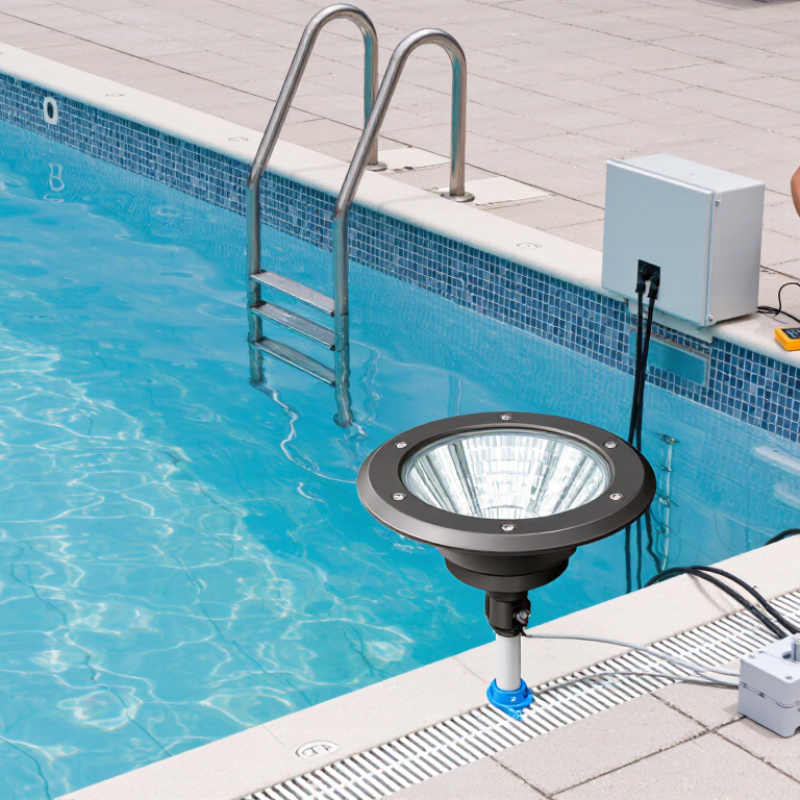
Low-voltage and line-voltage pool lighting describe the electrical supply reaching the fixture. Low-voltage systems commonly use 12 or 24 volts through a listed transformer. Line-voltage systems typically use 120 volts, or higher in some installations. The difference matters because water, metal fittings, and damaged insulation can create dangerous current paths. Lower voltage can reduce shock severity, but it does not remove electrical risk.
NFPA 70, Article 680, requires pool lighting to address grounding, bonding, GFCI protection, and equipment location. Underwater fixtures also need suitable listings, seals, and installation methods. UL 676 covers electrically operated pool and spa equipment, including underwater lighting products. These standards explain why voltage alone cannot define safety. A poorly installed low-voltage light may still expose swimmers to hazards. That point deserves more attention.
The U.S. Consumer Product Safety Commission reported an annual average of 371 fatal child drownings in pools or spas among children under 15 from 2020 through 2022. It also recorded about 6,500 nonfatal drowning injuries treated in emergency departments each year. Lighting does not prevent drowning, but reliable illumination can help adults see steps, ledges, and swimmers after sunset. A practical inspection should check the transformer, GFCI test function, bonding connections, cable jackets, and lens seals. I would not treat a dim or flickering light as a minor maintenance issue. That assumption can age badly.
Voltage strongly affects how electricity behaves around wet skin. In pool areas, water lowers body resistance, allowing more current to pass through the body. A 120-volt lighting circuit can therefore create a severe shock hazard after insulation damage or incorrect installation. Low-voltage systems, commonly operating at 12 volts, reduce the electrical pressure available at the fixture. That does not make them harmless. Faulty transformers, damaged cables, and poor connections can still cause injury.
The CPSC’s 2024 Pool or Spa Submersion Report estimated annual averages of 371 fatal child drownings and 6,500 emergency-department injuries involving children under 15. Electrical safety is only one layer, but poolside risks overlap quickly. A wet deck, bare feet, and a metal fitting create a realistic failure scene. NFPA 70, the 2023 National Electrical Code, addresses pool lighting through requirements for GFCI protection, grounding, bonding, and listed equipment. Those safeguards matter more than voltage alone.
During practical inspections, installers should check the transformer enclosure, cable seals, bonding conductors, and GFCI operation. A low-voltage light can still be unsafe when a seal cracks underwater. This is where the common “low voltage means safe” assumption fails. I would also question installations that hide connections beneath paving or landscaping. They may look tidy, but inaccessible faults are difficult to test, repair, or notice.
A low-voltage pool light usually operates at 12 or 24 volts, rather than household 120 volts. That lower electrical pressure reduces the current that may pass through wet skin during a fault. It does not make shock impossible. Water, damaged insulation, poor bonding, or incorrect installation can still create danger.
The U.S. Consumer Product Safety Commission reports an average of 371 fatal child drownings in pools and spas each year, based on 2018–2020 data. These figures concern drowning, not electrical incidents, but they show why every pool hazard deserves careful control. NFPA 70, Article 680, requires specific protection for pool lighting, including listed equipment, bonding, and ground-fault protection. A properly installed isolation transformer can separate the light circuit from the higher-voltage supply. A ground-fault circuit interrupter can also disconnect power quickly when current leaves its intended path.
The wiring matters most.
A low-voltage label cannot repair a loose connection or cracked fixture seal. Pool professionals should verify transformer ratings, cable condition, grounding, bonding, and the required protection device. I would not assume every “12-volt” light is equally safe; some systems are poorly maintained or incorrectly matched. Voltage reduces risk, but installation quality determines whether that advantage survives in real water.
Low-voltage pool lights are safer because a transformer reduces the electrical pressure near wet surfaces. A properly rated transformer separates the lighting circuit from the higher-voltage supply. That separation matters.
However, low voltage is not harmless. A damaged cable, loose connection, or flooded fixture can still create a dangerous fault. The National Electrical Code, Article 680, requires careful bonding, grounding, and protection for pool electrical systems. Metal parts should be bonded so fault current follows a controlled path. The grounding connection then supports rapid fault clearing.
GFCI protection adds another safety layer. It monitors current balance and disconnects power when electricity leaks toward water, equipment, or a person.
The U.S. Consumer Product Safety Commission reported an average of 371 fatal child drownings annually from 2019 through 2021. That report concerns drowning, not lighting, but it shows why every pool safety detail deserves attention. NFPA research estimated 35,150 home fires annually involving electrical distribution and lighting equipment from 2015 through 2019.
Those figures reinforce a practical lesson: installation quality matters as much as voltage. A certified electrician should verify transformer location, cable insulation, bonding continuity, and GFCI operation. Test it regularly.
I still hesitate to call any pool light completely safe. Even a well-designed system can fail when maintenance is ignored.
Why Are Low Voltage Pool Lights Safer Than Line Voltage?
Low voltage pool lights usually operate at 12 or 24 volts, reducing shock risk near water. However, low voltage does not mean risk-free. A damaged cable, poor connection, or flooded fixture can still create dangerous conditions. The U.S. Consumer Product Safety Commission reported an average of 358 fatal child drownings annually from 2019 to 2021. Electrical safety must therefore support, not replace, supervision and barriers around the pool.
Choose lighting listed for wet locations and matched with a properly rated safety transformer. The transformer should be installed away from splash zones and protected by a ground-fault circuit interrupter. Under NFPA 70, Article 680, pool electrical systems require specific bonding, grounding, and GFCI measures. These details matter more than brightness. A certified electrician should verify cable routing, connector seals, grounding continuity, and water-entry protection before energizing the system.
During installation, keep cables protected from sharp edges and avoid improvised extensions. Test the GFCI before use, then inspect it regularly. Low voltage is not a magic shield. I have seen safety plans focus on the lamp while ignoring the transformer and cable path. That is a useful warning. The safest design treats every component as part of one system, and local electrical requirements should always be checked before work begins.
It usually operates at 12 or 24 volts through a listed transformer. Lower voltage reduces electrical pressure at the fixture. It does not remove danger.
It commonly uses 120 volts, or higher in some installations. Water can lower body resistance. Damaged insulation may then create a severe shock path.
No. A cracked seal, damaged cable, or faulty transformer can still cause injury. “Low voltage means safe” is an unsafe assumption.
Wet skin conducts electricity more easily than dry skin. Bare feet, a wet deck, and metal fittings can form a dangerous path.
Proper grounding, bonding, GFCI protection, suitable seals, and approved equipment are important. Voltage alone cannot define safety.
Check the transformer enclosure, cable jackets, connections, bonding conductors, lens seals, and GFCI test function. Look closely.
No. It may indicate a loose connection, damaged cable, failing transformer, or moisture inside the fixture. Ignoring it can age badly.
No. Lighting cannot replace active supervision or other safety measures. However, reliable illumination can help adults see swimmers, steps, and ledges after sunset.
Hidden connections beneath paving or landscaping may look neat. They are harder to inspect, repair, and test. Convenient is not always safer.
Why are low voltage pool lights safer than line voltage? The main reason is that they operate at a much lower electrical potential, which can reduce the severity of an accidental shock in a wet poolside environment. Line-voltage lighting carries substantially more electrical energy and therefore requires especially careful installation, insulation, and protection. Low-voltage systems are commonly powered through a transformer that converts household electricity to a safer level before it reaches the light fixture, helping limit risk around water.
However, low voltage does not eliminate danger by itself. Safe pool lighting also depends on proper grounding, bonding, waterproof connections, and a correctly installed ground-fault circuit interrupter (GFCI). When choosing and installing these lights, homeowners should select equipment designed for wet locations, follow local electrical requirements, and use a qualified professional for electrical work. A complete safety approach combines suitable voltage, reliable components, proper transformer placement, regular inspection, and immediate replacement of damaged cables or fixtures.
