
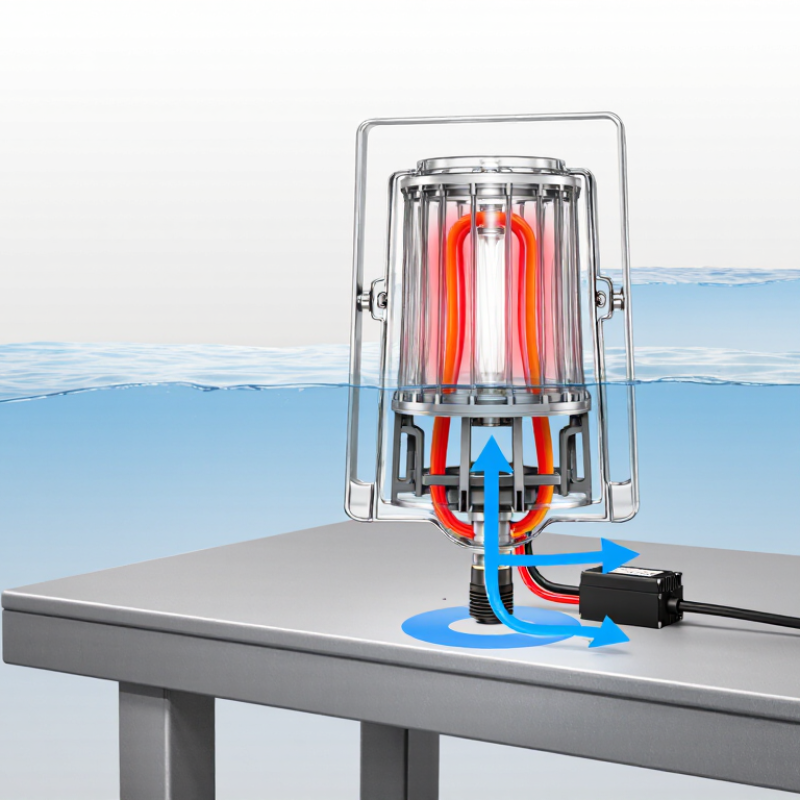
Why Should You Not Turn On an Underwater Light Out of Water?
An underwater light depends on surrounding water to carry heat away from its housing. Out of water, that cooling path becomes much weaker. The lamp may still turn on normally, which makes the danger easy to miss. Inside, the LED, circuit board, and wiring can heat rapidly within minutes.
High temperatures may shorten LED life and damage the driver that controls electrical current. Heat can also soften internal adhesives, distort plastic parts, or weaken seals around the lens. A hot housing can create uneven pressure during cooling. Later, moisture may enter through a seal that looked perfectly sound.
The mistake is easy.
I once assumed a brief dry test was harmless. That assumption was incomplete. Even a short test can raise temperatures beyond the light’s intended operating range, especially in direct sunlight or a warm workshop. Follow the manufacturer’s instructions and use water whenever the design requires it. If a dry check is unavoidable, keep it extremely brief and switch it off immediately if the housing becomes unusually warm. Let the light cool before handling, opening, or placing it underwater. A damaged seal may not fail immediately. Its weakness can appear during the next dive.
